
You Will Own Nothing: How Flock Safety Keeps Cities From Their Own Surveillance Data
Flock customers technically 'own' their footage — but can't access high-resolution originals, get images with unreliable timestamps and scrubbed metadata, and must submit formal requests through Flock's own evidence platform just to obtain their own records.
In December 2025, I wrote an article about Flock changing its Terms and Conditions. That change included some important language that made “Footage” (a term defined in the contract) no longer “owned” by Flock customers. Specifically, I wrote:
Even if the original footage is available to Flock, you may get an edited or altered version (e.g. cropped or with watermarks overlaid), or a reduced-resolution version. You may also get it late, or never, and the conditions for access are at Flock’s discretion.
Although Flock revised its terms again soon after, restoring on-paper “ownership” to the customer but giving itself broader license to do what it wants with copies, the prediction held. An open records response from Missouri shows the result of Flock’s policy of “ownership.”
#The Original Footage
The request was made by Deflock Joplin, the group responsible for the January 2026 headline “Joplin officer no longer employed after alleged misuse of license plate tracking system.” The records request is straightforward:
Recordings from the Flock LPR camera located at 4th and Maiden Ln from 2/16/2026 starting at 5:00 PM lasting until 6:00 PM. This camera is on the south west corner of the intersection facing a southern direction. The records requested should include stills, video, and all other records generated by the camera. I request the data from Flock OS and the camera’s internal storage.
The City of Joplin charged $23.57 for the request and fulfilled it a couple of weeks after receiving payment with a file “Flock_Safety_Search_Image_Results_3-9-2026_1-22-54PM.” The city did not include 40 minutes of footage/images, stating “we are currently experiencing a technical issue affecting this functionality.”
While technical issues that prevent a city from accessing “its” data would be a cause for concern, rumor has it that the “technical issues” in question occurred somewhere between the keyboard and the chair, and the city did not understand how to save images. The city did supply the missing 40 minutes once the discrepancy was pointed out.
#World’s Fastest Truck
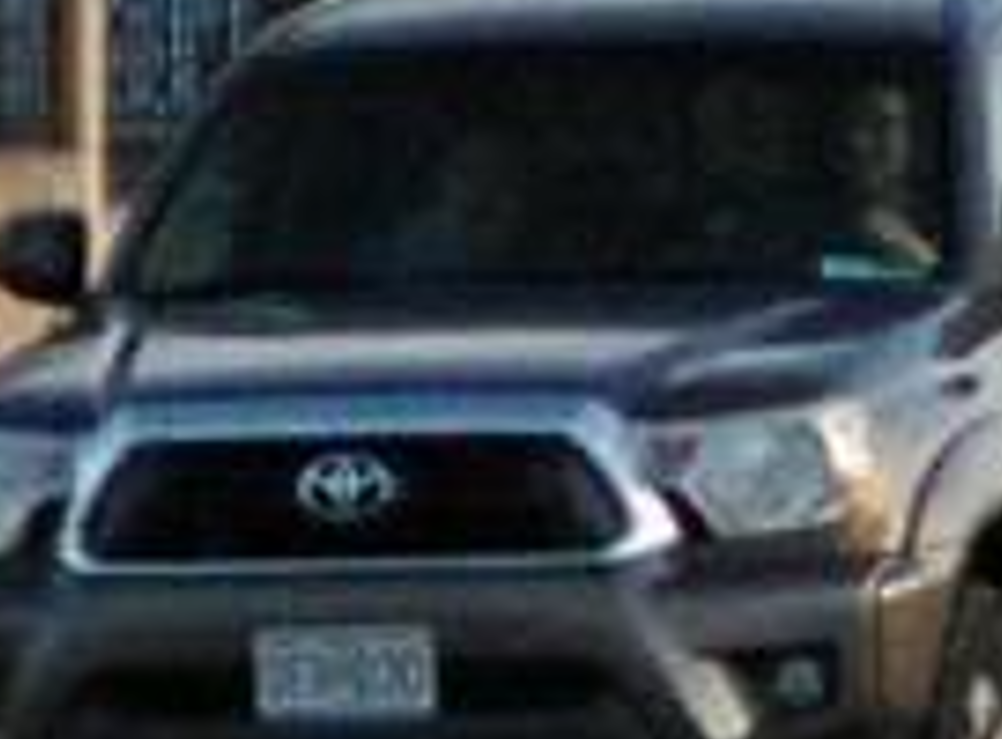
As far as we know, Flock cameras take a series of images and/or a short video clip when they detect motion. Flock and police often emphasize that it’s “only the license plate” or “just the back of the vehicle.” Of course, the laws of physics dictate that you can’t know what’s in a picture before you take it. This truck is a demonstration:


These two images were taken in rapid succession. It’s hard to even tell the vehicles are in a different location, but you can see the “Flock Safety” watermark is positioned differently.[1]
These images are clearly of the front of the vehicle. But that’s not the interesting part.
#Metadata and Time Confusion
Some of these images have been used as evidence at criminal trials, many in the “over 30 cases” that Flock likes to falsely cite as upholding the constitutionality of its cameras. The timestamps on the Joplin images should give anyone relying on that evidence pause.
The filename for both images contains “2026-02-16T23-39-42.219+00-00”, suggesting the images were taken less than 0.0005 seconds apart. That is neither possible, nor true, based on what’s in the images: we can see the car moving maybe 10 feet. Tacomas don’t typically travel at hypersonic speeds exceeding Mach 17.
The timestamp in the picture is “2/16/2026 17:39:42 CDT.” This is an odd mix. The date is unmistakably American (mm/dd/yyyy), but the time is 24 hours rather than am/pm. On February 16, that’s not confusing. Four days earlier, it might have been.
But even more confusing is that the timezone is labeled as CDT, or Central Daylight Savings Time (UTC-5). Daylight savings is not in effect in the middle of February in Missouri, when CST (UTC-6) is in effect. The image is ambiguous as to whether it shows an image taken at 5:39pm or 4:39pm.
The timestamp in the filename (23:39:42.219 UTC) suggests the labeling (“CDT”) is off, but we’ve already established that it is not possible for the timestamp to be accurate for both images until we have hypersonic Tacomas.
The (EXIF) metadata has been scrubbed, so there is no third hint.
That leaves these images without a reliable timestamp. These aren’t abstract concerns — they cast doubt not only on the accuracy of these files, but on the accuracy of every other image produced by the same system.[2]

The only way we can determine the time with any certainty is by looking at the position of the sun and the 5:59pm sunset noted in the almanac for Joplin, MO, on February 16.
AI-based surveillance so high-tech you need a sundial to make sense of it.
#License Plate Detection
The other piece of metadata in the image, below the timestamp, is a license plate: 0FH D30. According to lookupaplate.com, the plate corresponds to a 2014 Toyota Tacoma with an extended cab.[3] The plate is also formatted per Missouri’s light truck standards, with a renewal date in April (F) and a last sale date likely in 2023 or 2024 (H).
The quality of these images is extremely low (second image), to the point where they no longer contain the license plate information.

Everyone who has ever used a computer knows that the “zoom and enhance” from movies and TV shows isn’t really a thing. Sure, you can backhack and extrapolate some data, but here too the laws of physics get in the way.
#Access to the Image
If we assume Flock abides by the laws of physics — if no others — then the only sensible conclusion is that the license plate encoded in the bottom-right of the frame was not derived from these images at all, but from some other image that the City of Joplin theoretically owns, but can’t access.
This also independently follows from the fact that the images have watermarks and metadata overlays, assuming those are not created by the hardware itself.[4]
The requester was precise and asked for “the data from Flock OS and the camera’s internal storage” to ensure he got the actual image, and not only a presentation version.
A high-resolution version must exist somewhere. Flock generally suggests that the city owns the original image and that it will be retained until the end of the retention period. That is to say, Flock should not be deleting its customers’ data without authorization.
Joplin provided the images shown and states that “[t]he Sunshine Law does not require the Department to obtain duplicate copies of the same data directly from the vendor or from the camera’s internal storage in addition to what we can access via our portal.”
In other words, there are no originals, but even if there were, the city can’t access them.
Not even Joplin, the ostensible owner of the images, is allowed to look at them.
Below is an AI-enhanced image, where Google’s “Nano Banana” (a generative AI upscaling model) has filled in the blanks by making up what could have been in the picture.

This image does not show the actual content of the original, but it shows a level of clarity and detail that is much closer to the original image captured than the blurry version that Joplin can access and provided in response to the request.
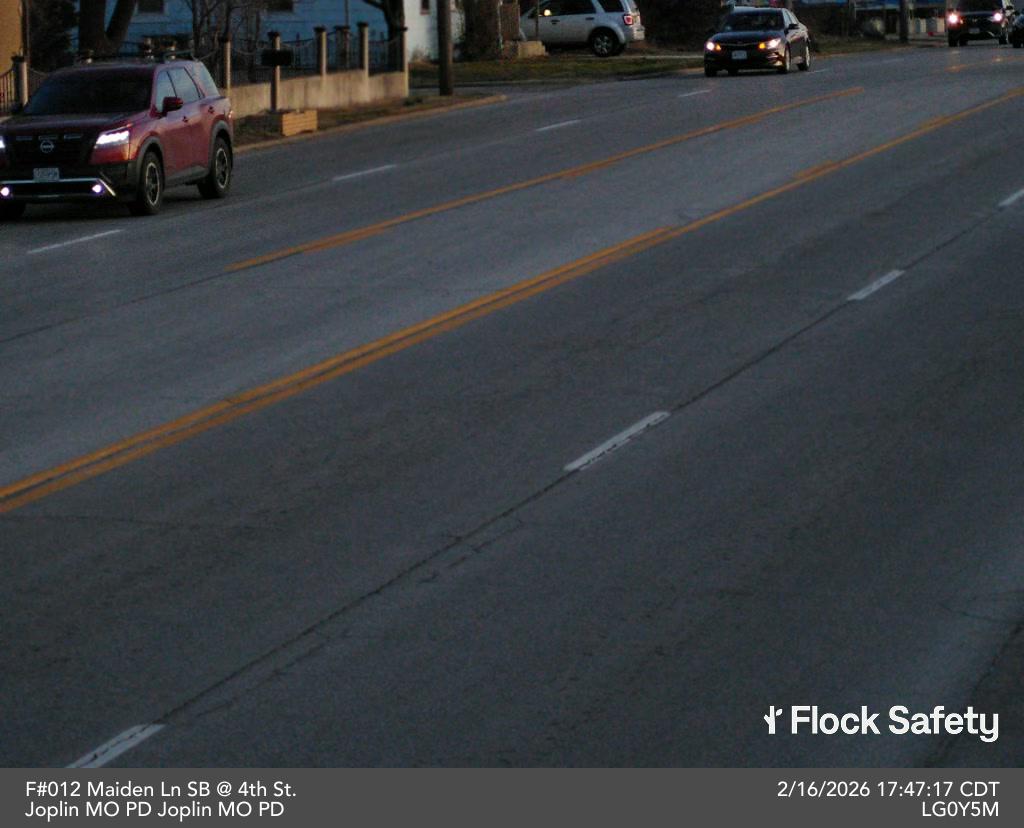
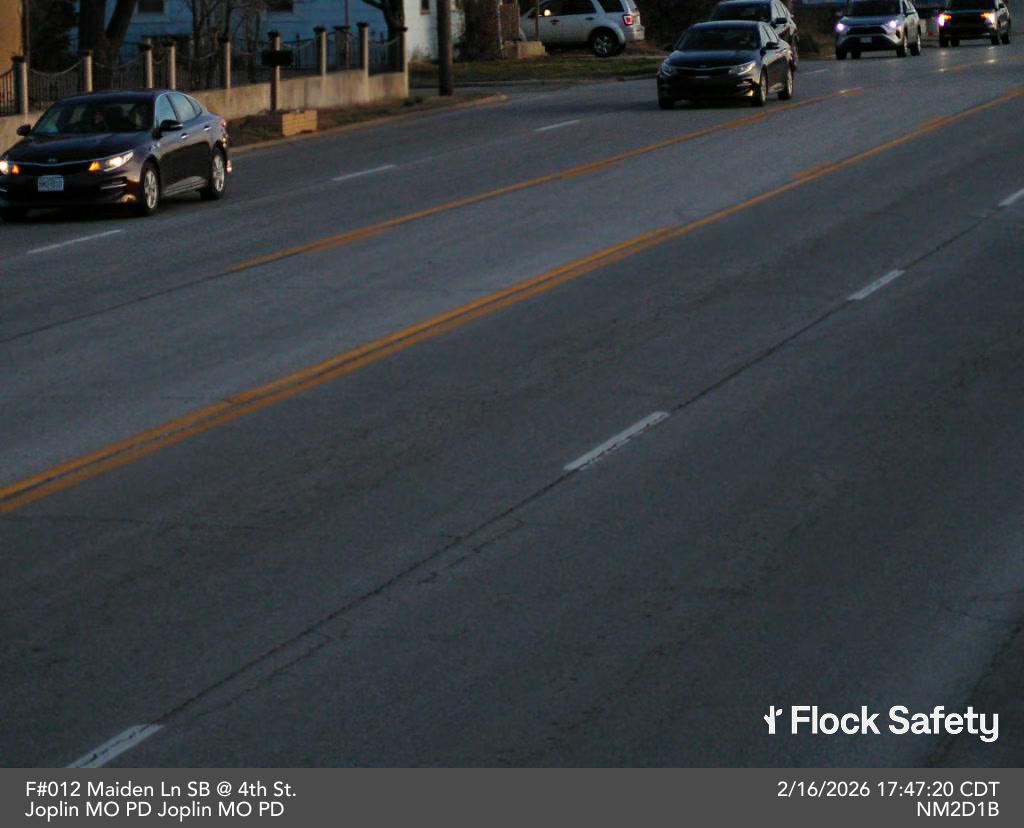
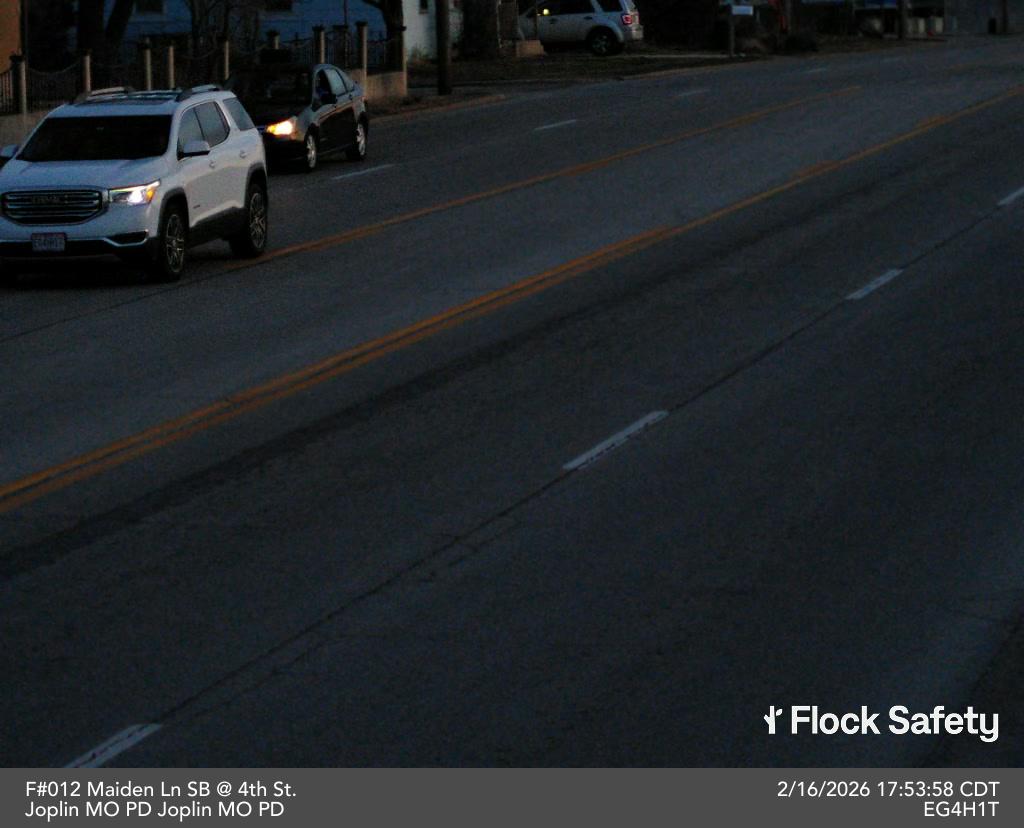
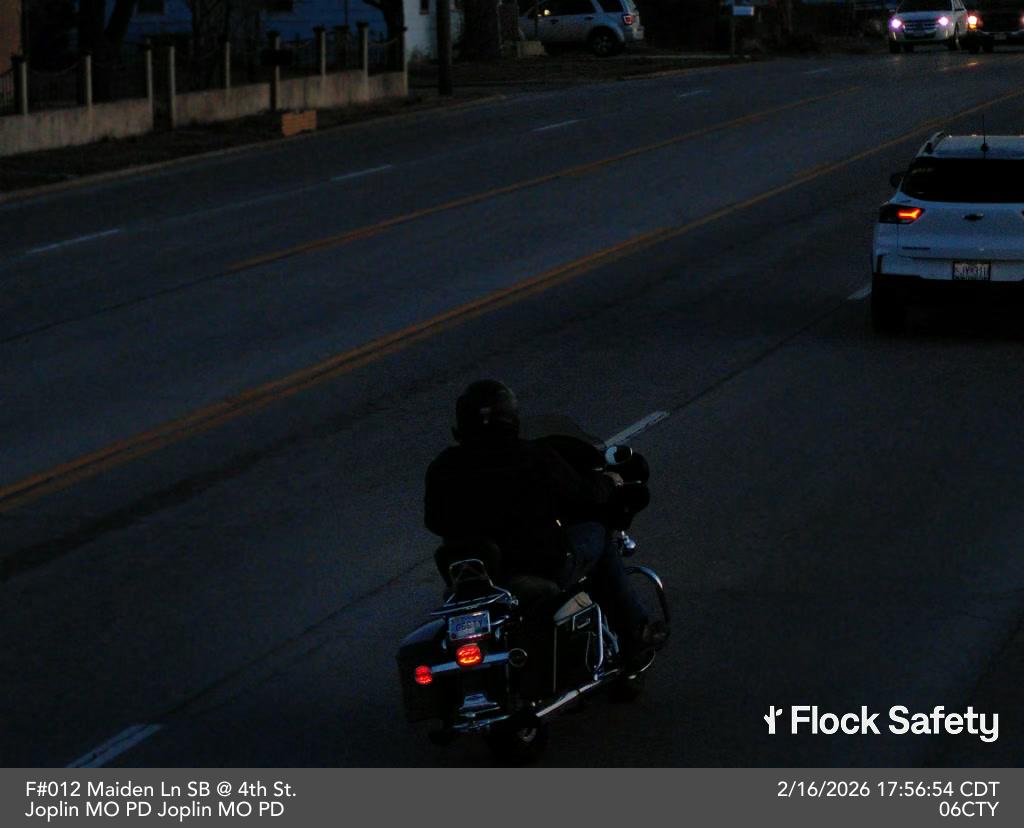
The Tacoma is not an outlier; there are cars (picture 1, picture 2), SUVs, and — just to cover “we don’t photograph people” — a motorcyclist. None of these plates are legible.
#The Original Logs
The ownership problem extends beyond images. Logs suffer the same fate. I’ve written at length about Flock unilaterally removing log data, and how that cuts against both the supposed immutability of the logs, as well as customer ownership.
I’ve alluded to how, in some states, it may fall under statutes prohibiting the alteration or destruction of public records, and written about how Flock inserts itself in open records requests even when law prohibits doing so. I won’t rehash all of that here.
Instead, I give you the Flock “Customer Guidance for Preserving and Requesting Flock Data for Public Records Requests”:
It’s a guide on how to submit requests for data via Kodex, which, according to Flock, “is a secure digital platform for managing, processing, and responding to data and legal requests.”
Flock uses the system for “Legal requests,” which apparently includes open records requests, “Preservation requests,”[5] and “Quick questions.”
Once the ostensible owner of the records requests “their” records from Flock, “Flock’s Evidence Division and Engineering Team will review your request, pull available data, and transmit the completed data package through Kodex.”
Flock does note that “our Evidence Policy asks for 14 calendar days to fulfill requests. If data is needed sooner, we are motivated to help customers to meet any FOIA/PRA deadlines they are facing.”
Government agencies are responsible for their own deadlines. In states with statutory deadlines, and even those without, the requirement is not “respond within 10 days, or later is fine too if your vendor is not feeling it.”
In fact, a 14 calendar day limit exceeds the statutory deadline in several states, and entering into a contract that formally requires non-compliance with law is a legally dubious proposition.
#Ownership in Name Only
Officials tell the public that Flock’s cameras “take a picture of the back of the vehicle” and “only capture license plates.” They assure us the image does not include the vehicle’s occupants.
Cities like Joplin genuinely can’t access all of “their” information. They uncritically accept blurry images with derived license plates, and if they want the originals, they must ask the vendor nicely and wait at least 14 days — or less, if the Spirit so happens to move Flock.
The ownership is a fiction. The customer has never possessed the original image or the original log. If it can even obtain it at all, it can’t do so independently; it can only submit a formal request to Flock — which will respond on its own timeline, in whatever format it chooses.
That’s not ownership. That’s a favor.
And this is the evidence that’s putting people in prison.
Deflock Joplin published its own analysis of the images, where they raise some excellent points.
Note: The images in this article are post-processed for web delivery. They may be of slightly lower quality than the originals. The originals are available via MuckRock.
This watermark appears in all images, but its placement varies. It suggests maybe Flock is trying to place it in an area where it would not be in the way. As you can see, it doesn’t appear to work great. ↩︎
See last month’s article about “the burden of truth” for details on how Flock’s evidence authentication system further exacerbates this problem. ↩︎
I make no claims about that website’s accuracy, but we do appear to be looking at a second-generation Toyota Tacoma. ↩︎
This is a reasonable assumption, given what we know about Flock’s hardware. ↩︎
Flock having a process for preservation requests is interesting for various (legal) reasons, but those are outside the scope of this article. ↩︎